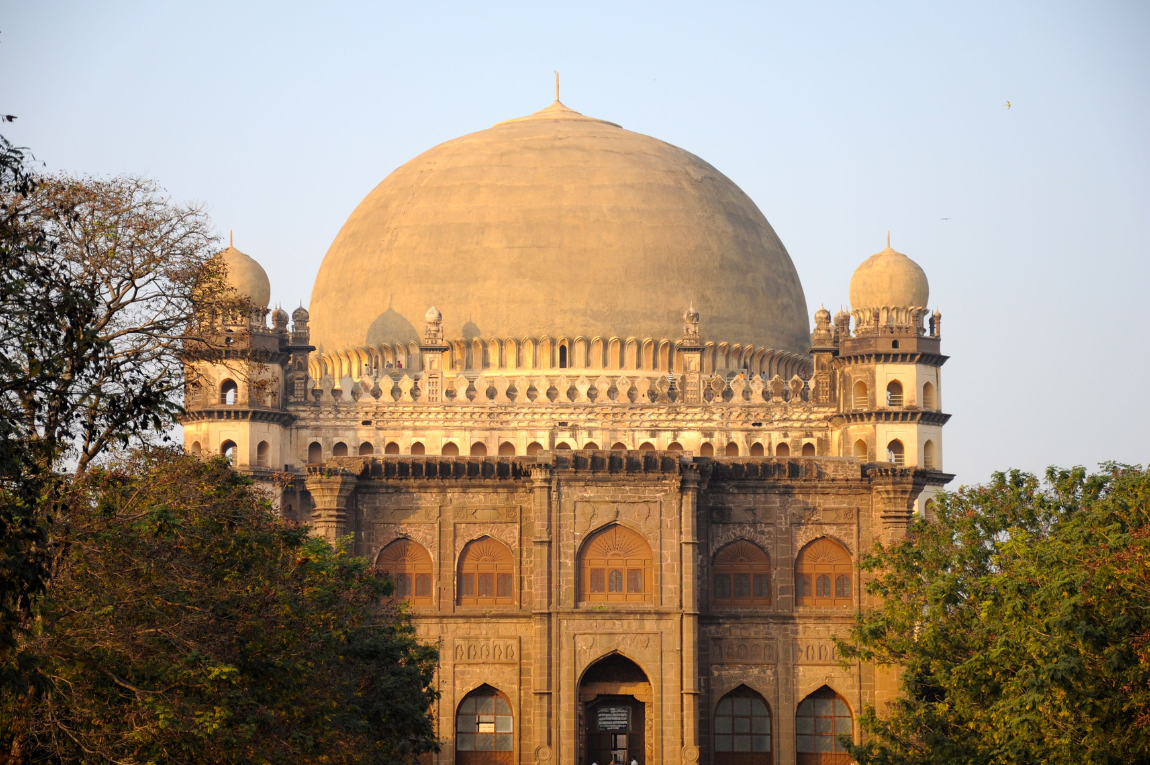
Golgumbaz, located in the heart of Bijapur, Karnataka, stands as an architectural masterpiece and a testament to the rich history of the Deccan region. This iconic structure is renowned for its striking dome, making it one of the most recognized monuments in India. Let’s delve into the fascinating aspects of Golgumbaz, exploring its quick facts, historical significance, architectural marvel, and how one can embark on a journey to witness this grand structure.
Quick Facts About Golgumbaz:
- Date of Construction: Golgumbaz was built during the reign of Sultan Mohammed Adil Shah in the 17th century. The construction started in 1626 and completed in 1656.
- Architectural Style: The monument is a prime example of Deccan architecture, with influences from Persian and Indian styles.
- Monumental Dimensions: Golgumbaz boasts an impressive dome, the second-largest in the world, after St. Peter’s Basilica in Rome. The diameter of the dome is 44 meters.
- Whispering Gallery: One of the unique features is the Whispering Gallery, where the faintest whisper echoes multiple times, allowing communication across the vast dome.
- Burial Site: The tomb inside Golgumbaz is the final resting place of Sultan Mohammed Adil Shah, his wives, and relatives.
History of Golgumbaz:
The history of Golgumbaz is deeply intertwined with the Adil Shahi dynasty, the rulers of Bijapur. Sultan Mohammed Adil Shah II commissioned the construction of Golgumbaz as a mausoleum for himself. The word “Golgumbaz” translates to “Round Dome” in Persian, perfectly describing the monument’s distinctive feature.
During the 17th century, the Deccan region witnessed a flourishing cultural and architectural renaissance under the Adil Shahi rulers. Golgumbaz became a testament to their grand vision and artistic prowess. The construction, initiated by the Sultan, continued even after his demise, and it was completed by his son Ali Adil Shah II.
Architecture of Golgumbaz:
Golgumbaz’s architecture is an amalgamation of Persian, Indian, and Deccan styles, resulting in a unique and awe-inspiring structure. The most prominent feature is the colossal dome that dominates the skyline. Here are some key architectural elements:
- Whispering Gallery: The dome encompasses a Whispering Gallery, an acoustic marvel where even the softest murmur can be heard across the vast space due to its unique acoustics.
- Four Minarets: The monument is adorned with four minarets on each corner, enhancing its regal appearance. Visitors can ascend these minarets to get panoramic views of Bijapur.
- Drum and Dome: The main dome, referred to as the “whispering dome,” sits atop a massive drum. The inner side of the dome features beautiful geometric patterns and calligraphy.
- Interior Decor: The interior of Golgumbaz showcases intricate artwork, including ornate calligraphy and geometric designs. The tomb chamber houses the cenotaphs of Sultan Mohammed Adil Shah II and his family.
- Gardens and Fountains: Surrounding Golgumbaz are lush gardens and fountains, creating a serene ambiance that complements the grandeur of the structure.
How to Reach Golgumbaz:
For travelers seeking to witness the grandeur of Golgumbaz, reaching Bijapur is the first step. Here’s a guide on how to reach this historical marvel:
- By Air: The nearest airport to Bijapur is Belgaum Airport, approximately 200 kilometers away. From the airport, one can hire a taxi or take a bus to reach Bijapur.
- By Train: Bijapur has a well-connected railway station with regular trains from major cities like Bangalore, Hyderabad, and Mumbai. The railway station is conveniently located, allowing easy access to Golgumbaz.
- By Road: Bijapur is well-connected by road, and buses ply regularly from neighboring cities. One can also opt for private taxis or self-driven cars to reach Bijapur.
Once in Bijapur, Golgumbaz is easily accessible, and local transportation options like auto-rickshaws or taxis can take visitors to this iconic monument.
In conclusion, Golgumbaz stands not only as a symbol of architectural brilliance but also as a repository of historical tales from the Deccan region. Its colossal dome, intricate design, and historical significance make it a must-visit destination for history enthusiasts and admirers of exquisite architecture. As you stand in the Whispering Gallery and gaze at the sprawling landscape from the minarets, Golgumbaz transports you to a bygone era, inviting you to unravel the mysteries of the Deccan’s royal past.