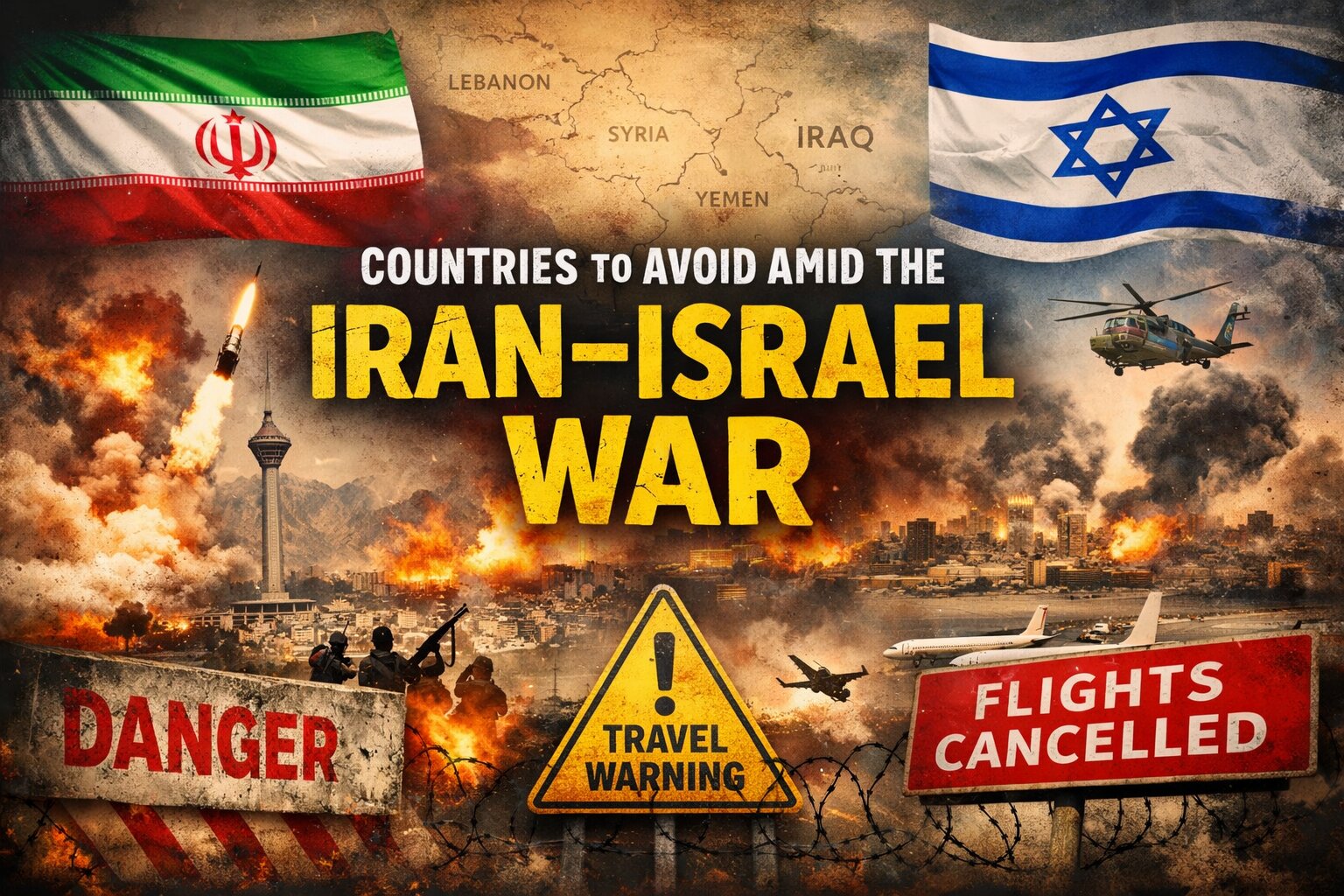
The ongoing conflict between Iran and Israel has significantly escalated tensions across the Middle East, prompting governments worldwide to issue urgent travel advisories. Military strikes, missile attacks, airspace closures, and rising regional instability have made several countries unsafe for tourists and non-essential travelers. Experts and governments are urging people to postpone travel plans to high-risk areas until the situation stabilizes.
Direct Conflict Zones: Iran and Israel
The most dangerous destinations currently are Iran and Israel, which remain at the center of the conflict. Authorities in multiple countries have issued “Do Not Travel” warnings due to armed conflict, terrorism risks, and unpredictable security conditions. Iran has also faced missile strikes and retaliatory attacks, making major cities potential targets.
In Israel, ongoing military operations and threats from regional militant groups have created a volatile environment, especially near border regions and conflict zones. Security experts warn that the situation can escalate rapidly, leaving travelers stranded or unable to evacuate safely.
High-Risk Neighboring Countries
Beyond the direct war zones, several neighboring countries are also considered risky because of their proximity to the conflict and potential spillover effects. These include Lebanon, Syria, Iraq, and Yemen.
These nations already face internal security challenges, and the Iran–Israel conflict increases the likelihood of militant activity, missile attacks, or regional escalation. International governments have warned their citizens to avoid travel to these countries due to ongoing armed conflict and unstable political conditions.
Gulf Countries with Rising Security Concerns
Even relatively stable Gulf nations have issued cautionary alerts due to missile threats and airspace disruptions. Travelers are advised to exercise caution or avoid non-essential travel to countries such as Saudi Arabia, United Arab Emirates, Qatar, Kuwait, Bahrain, and Oman.
Recent missile attacks and regional tensions have forced several countries to close or restrict their airspace. As a result, airlines have canceled many flights across the region, leaving travelers stranded and disrupting international travel routes.
Countries Affected by Travel Disruptions
Other nearby countries such as Jordan and Egypt are not direct participants in the conflict but are experiencing indirect impacts. These include heightened security alerts, partial airspace closures, and travel disruptions due to military operations and regional tensions. Governments have advised travelers to stay updated with embassy notices and airline advisories before planning trips to these areas.
Impact on Global Travel
The Iran–Israel conflict has also affected global aviation routes. Many airlines are avoiding Iranian and Israeli airspace, causing longer flight paths between Europe and Asia. Additionally, strategic maritime routes such as the Strait of Hormuz have become high-risk areas due to potential naval or missile threats.
Safety Advice for Travelers
Travel experts recommend that tourists:
-
Avoid travel to conflict zones and nearby high-risk countries.
-
Monitor official travel advisories from their governments.
-
Check airline updates for flight cancellations or rerouting.
-
Register with embassies if traveling in the region.
Conclusion
The Iran–Israel war has created widespread instability across the Middle East, making several countries unsafe for travel. Until tensions ease, travelers are strongly advised to postpone visits to affected regions and choose safer international destinations. Staying informed and prioritizing safety is essential as the geopolitical situation continues to evolve.