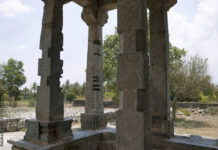
Quick Facts About Achyuta Raya Temple, Hampi:
Nestled amidst the historical ruins of Hampi, the Achyuta Raya Temple stands as a testament to the architectural grandeur of the Vijayanagara Empire. Dedicated to Lord Tiruvengalanatha, an incarnation of Lord Vishnu, this temple is one of the prominent landmarks in the UNESCO World Heritage Site of Hampi, Karnataka.
- Location: Hampi, Karnataka, India
- Deity: Lord Tiruvengalanatha (Lord Vishnu)
- Architectural Style: Vijayanagara
- Built In: 1534 AD
- Status: Active pilgrimage site and historical monument
History of Achyuta Raya Temple, Hampi:
The Achyuta Raya Temple, constructed in 1534 AD during the reign of King Achyuta Deva Raya, is a glorious representation of the religious and cultural significance that flourished in the Vijayanagara Empire. The Vijayanagara Empire, known for its rich patronage of art and architecture, witnessed the construction of numerous temples, each a unique blend of Dravidian and Indo-Islamic styles.
Dedicated to Lord Tiruvengalanatha, an epithet of Lord Vishnu, the Achyuta Raya Temple served both as a place of worship and a symbol of the empire’s opulence. The temple complex, surrounded by the stunning landscape of Hampi, unfolds a narrative of devotion, power, and artistic brilliance.
Architecture of Achyuta Raya Temple:
The Achyuta Raya Temple showcases the quintessential Vijayanagara architectural style, characterized by intricate carvings, towering structures, and a harmonious blend of various design elements. The temple is enclosed by a high compound wall, and upon entering, visitors are greeted by a spacious courtyard leading to the main sanctum.
The Main Sanctum: The sanctum sanctorum, housing the idol of Lord Tiruvengalanatha, is the focal point of the temple. The deity is adorned with intricate jewelry, and the aura within the sanctum exudes a sense of divine tranquility. The walls of the sanctum are adorned with carved panels narrating episodes from Hindu mythology, creating a spiritual ambience.
The Raya Gopuram: The Raya Gopuram, or the main entrance tower, is an imposing structure adorned with ornate sculptures and intricately carved motifs. The tower stands tall, welcoming devotees and visitors alike. The detailed craftsmanship on the gopuram reflects the artistic finesse of the Vijayanagara artisans.
Pillared Halls and Mandapas: The temple complex boasts several pillared halls and mandapas, each serving a specific ceremonial or congregational purpose. The musical pillars within these halls produce distinct musical notes when struck, adding a unique acoustic charm to the architectural marvel.
Carvings and Sculptures: One of the most captivating features of the Achyuta Raya Temple is the plethora of carvings and sculptures that adorn its walls. From intricate floral patterns to mythological narratives, every inch of the temple is a canvas reflecting the creative genius of the artisans. The sculptural ensemble includes depictions of gods, goddesses, celestial beings, and scenes from epics like the Ramayana and Mahabharata.
How to Reach Achyuta Raya Temple:
By Air: The nearest airport to Hampi is the Vidyanagar Airport in Bellary, approximately 74 kilometers away. From the airport, visitors can hire taxis or use other modes of transportation to reach Hampi.
By Train: Hospet Junction, around 13 kilometers from Hampi, is the nearest railway station. Hospet is well-connected to major cities in Karnataka and other parts of India. From Hospet, one can easily find taxis or buses to reach Hampi.
By Road: Hampi is well-connected by road, and buses regularly ply from Hospet and other nearby towns. Private taxis and auto-rickshaws are also available for a convenient journey to Hampi.
Visitors to the Achyuta Raya Temple not only witness the grandeur of Vijayanagara architecture but also immerse themselves in the spiritual ambiance that resonates through the ancient stones. The temple stands as a silent guardian to the bygone era, inviting all to marvel at the artistic legacy left by the Vijayanagara Empire in the heart of Karnataka’s Hampi.